
Biological Science Faculty Member
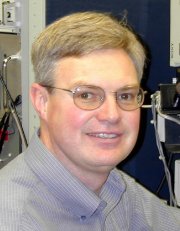
Dr. P. Bryant Chase
- Office: 353 Biology Unit I
- Office: (850) 645-4775
- Area: Cell and Molecular Biology
- Lab: Biology Unit I
- Fax: (850) 645-8447
- Mail code: 4370
- E-mail: chase@bio.fsu.edu
Professor
Ph.D., University of Southern California, 1984
Graduate Faculty Status
Research and Professional Interests:
Biomechanics of cardiac and skeletal muscle; BioNanotechnology
General research areas: Biophysics of muscle tissue, molecular motor proteins, and calcium regulation of contraction; cellular and molecular biomechanics of cardiac and skeletal muscle; BioNanotechnology.Research tools: Cellular and molecular biomechanical assays of permeabilized cardiac and skeletal muscle; in vitro motility assays; molecular biology; bioinformatics; biochemical and biomechanical modeling.
Major ongoing projects: Functional consequences of mutations in troponin I that cause hypertrophic cardiomyopathy; molecular and cellular biochemical/biomechanical model of striated muscle—a component of NASA/NSBRI’s "digital human." Inquire about additional projects.
The central theme of my research program is to understand the biophysical basis of biological motility, its regulation, and its modulation by cellular metabolism. Much remains to be learned about actomyosin interactions and their regulation, especially in cardiovascular function and diseases, cancer (metastasis), human performance, and bionanotechnology (biological nanomotors and protein mechanics). My experimental work has most often been directed toward answering molecular and cellular questions related to these topics; future experimental directions are, at one end of the spectrum, integrative studies using intact animals and, at the other, investigations at the single molecule level.
Troponin I and cardiac hypertrophy: In terms of clinical significance, the most important application—and currently my main focus—is understanding specific forms of cardiovascular disease, particularly the inherited (familial) forms of hypertrophic cardiomyopathy (FHC) and idiopathic dilated cardiomyopathy (IDC). In the first stage of the project, mutant forms of cardiac troponin I or troponin T are expressed in E. coli for incorporation into molecular and cellular assays that will test for changes in biomechanical function relative to wild type proteins. In its simplest terms, the hypothesis we are testing is whether the mutations cause hypertrophy by inhibiting function (causing compensatory hypertrophy) or by enhancing function (causing exercise-like hypertrophy). In later stages of the project, we will test whether mutants affect cardiac-specific modulations: sarcomere length (Starling’s law) and protein phosphorylation associated with adrenergic stimulation. See Chase et al. (2001) Biophys. J. 80:342a. These studies complement our previous work on troponin C, the calmodulin-like, Ca2+-binding subunit of troponin.
Metabolites, fatigue, and ischemia (intracellular environment): A long-standing problem I have worked on is the cellular basis for contractile deficit in fatigue or ischemia. We use permeabilized cellular preparations—in which we directly control metabolite concentrations (e.g., of ATP, ADP, Pi, [H+], and others)—to study the effects of altered metabolite levels on contractility. Related investigations use structural analogs of inorganic phosphate, aluminum fluoride, and beryllium fluoride. These analogs are interesting for biomechanical studies not only because they permit investigation of Pi in force generation but also for evaluation the physiological relevance of crystallographic structures of myosin motor domain complexes containing these analogs—structures considered central to our understanding of how molecular motors work. Other recent studies involve deoxy-ATP as a substrate for actomyosin. The biomechanical response to changes in metabolite concentration depends on the protein isoform(s) being studied (different proteins from different genes or from alternative splicing of mRNA) and could be altered by FHC-related mutations in cTnI (see above).
Modeling: A third research area is molecular and cellular biochemical and biomechanical modeling. Our Monte-Carlo modeling suggests that biomechanical "tuning" arises from finite stiffness of the proteins, and that this property contributes to apparent cooperativity of force generation in the steady-state, isometric situation. This tuning, observed under load-bearing conditions, will probably be an important design consideration for nanomechanical systems. Future directions for this project include expanding the model to handle larger ensembles of molecules and developing the tools necessary to test the model predictions.
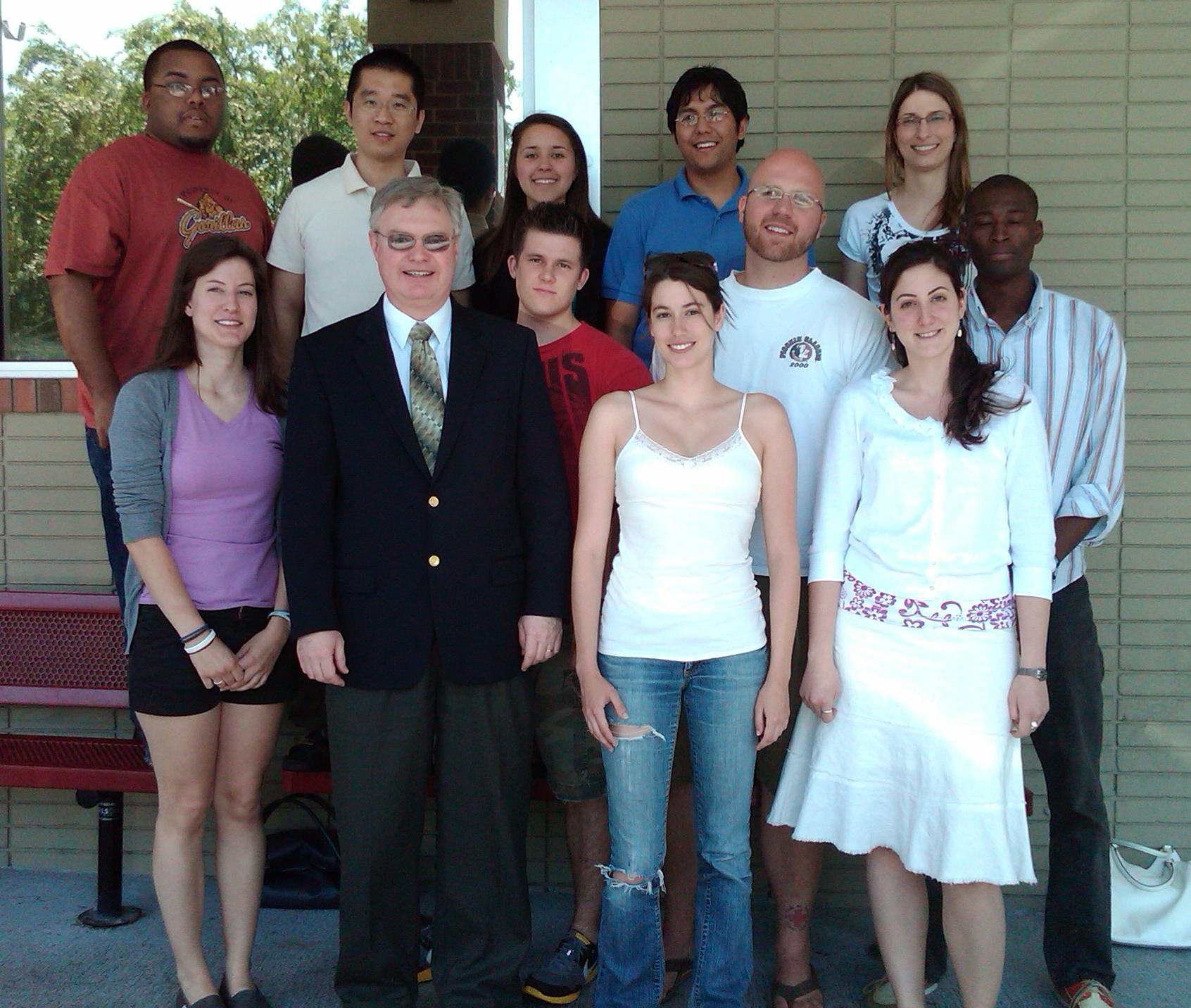
Chase lab (Spring 2010)
Front row: Katie Tieman, Dr. Chase, Maggie Shoemaker, Myriam Badr.
Middle row: Stephen Pape, Carl Whittington (Ellington/Moerland labs), Faizal Asumda.
Top row: John Williams, Campion Loong, Joelle Kane, Vincent LaBarbera, Linda Stroud.
Missing: Nancy Meyer.

Selected Publications:
Johnston, J. R., I. L. Coscarella, C. L. Rose, K. M. Dieseldorff Jones, J. M. Le Patourel, F. Ogunfuwa, A. S. Martins, K. M. Crotty, K. M. Ward Molla, J. Irianto, J. Y. Wang, L. Wang, B. C. Knollmann, J. R. Pinto, and P. B. Chase (2025) Cardiomyocyte nuclear pleomorphism in a mouse model of inherited hypertrophic cardiomyopathy. Journal of Cardiovascular Development and Disease 12: 449. [doi: 10.3390/jcdd12110449]
(open access)
Koopman*, A. J., A. J. Martin*, L. G. Moore*, M. Rodriguez*, and P. B. Chase (2025) RNA polymerase II activity and nuclear actin: possible roles of nuclear tropomyosin, troponin and Ca2+ in transcription in striated muscle myocyte nuclei [*equal contributions]. Macromol 5: 56. [doi: 10.3390/macromol5040056]
(open access)
Coscarella, I. L., O. H. Usman, L. Wang, M. Landim-Vieira, L. Wirstiuk, A. N. Brown, D. A. Zorio, B. K. Washburn, C. Vied, B. C. Knollmann, C. Solís, V. E. Galkin, P. B. Chase, J. T. Hinson, J. Irianto, and J. R. Pinto (2025) Phenotype specific nuclear lamina remodeling in hiPSC derived cardiomyocytes bearing TNNT2 sarcomeric variants. iScience 28: 113901. [doi: 10.1016/j.isci.2025.113901]
(open access)
Brunet, N. M., P. Xiong, and P. B. Chase (2025) Actomyosin-Based Nanodevices for Sensing and Actuation: Bridging Biology and Bioengineering. Biosensors 15: 672. [doi: 10.3390/bios15100672]
(DOI (open access))
Landim-Vieira*, M., R. M. Perelli*, M. Rodriguez-Garcia, V. P. Jani, R. C. Chastain, J. H. Lamar, E. Mines, G. Seo, A. Araújo Fernandes, B. C. Knollmann, M. P. Carboni, S. P. Chelko, V. E. Galkin, P. B. Chase, J. R. Pinto, and A. P. Landstrom (2025) Cardiac troponin C E135A variant impairs myofilament response to PKA phosphorylation and is associated with autosomal dominant dilated cardiomyopathy with diastolic dysfunction (*co-first authors). Circulation: Genomic and Precision Medicine 18: e004720. [doi: 10.1161/CIRCGEN.124.004720]
(PubMed) (DOI)
Risi, C. M., M. Landim-Vieira, B. Belknap, P. B. Chase, J. R. Pinto, and V. E. Galkin (2025) The role of the troponin T interactions with actin in regulation of cardiac thin filament revealed by the troponin T pathogenic variant Ile79Asn. Journal of Molecular and Cellular Cardiology 204: 55-67. [doi 10.1016/j.yjmcc.2025.05.005]
(DOI) (PubMed)
Shi, Y., L. A. Blackwell, R. K. Schroy, B. M. Cleland, C. M. Risi, M. S. Parvatiyar, J. R. Pinto, V. E. Galkin, and P. B. Chase (2025) A central role for troponin C amino-terminal alpha-helix in vertebrate thin filament Ca2+-activation. Physchem 15: 16. [doi: 10.3390/physchem5020016]
(DOI (open access)) (publisher (open access))
Laskin, G. R., L. I. Rentería, J. M. Muller-Delp, J. Kim, P. B. Chase, H. S. Hwang, and B. S. Gordon (2025) Short-term aerobic exercise prevents development of glucocorticoid myopathic features in aged skeletal muscle in a sex-dependent manner. Journal of Physiology 603: 127-149. [doi: 10.1113/JP286334]
(PubMed) (DOI)
Nieto Morales, P. F., A. N. Coons, A. J. Koopman, S. Patel, P. B. Chase, M. S. Parvatiyar, and J. R. Pinto (2024) Post-translational modifications of vertebrate striated muscle myosin heavy chains. Cytoskeleton 81: 832-842. [doi: 10.1002/cm.21857]
(DOI (open access)) (PubMed)
Risi, C. M., B. Belknap, J. Atherton, I. L. Coscarella, H. D. White, P. B. Chase, J. R. Pinto, and V. E. Galkin (2024) Troponin structural dynamics in the native cardiac thin filament revealed by cryo electron microscopy. Journal of Molecular Biology 436: 168498. [doi: 10.1016/j.jmb.2024.168498]
(DOI)
Chase, P. B., and A. N. Coons (2023) Ryanodine receptor-associated myopathies: What’s myosin got to do with it?. Acta Physiologica 239: e14058. [doi: 10.1111/apha.14058]
(DOI (open access))
Rodriguez Garcia, M. C., J. Schmeckpeper, M. Landim-Vieira, I. Leite Coscarella, X. Fang, W. Ma, P. A. Spran, S. Yuan, L. Qi, A. Rahimi Kahmini, B. Shoemaker, J. B. Atkinson, P. M. Kekenes-Huskey, T. C. Irving, P. B. Chase, B. C. Knollmann, and J. R. Pinto (2023) Disruption of Z-disc function promotes mechanical dysfunction in human myocardium: evidence for a dual myofilament modulatory role by alpha-actinin 2. International Journal of Molecular Sciences 24: 14572. [doi: 10.3390/ijms241914572]
(open access)
Wiseman, R. W., C. M. Brown, T. W. Beck, J. J. Brault, T. R. Reinoso, Y. Shi, and P. B. Chase (2023) Creatine Kinase Equilibration and (DELTA)GATP Over an Extended Range of Physiological Conditions: Implications for Cellular Energetics, Signaling and Muscle Performance. International Journal of Molecular Sciences 24: 13244. [doi: 10.3390/ijms241713244]
(open access)
Dunlap, K. R., J. L. Steiner, R. C. Hickner, P. B. Chase, and B. S. Gordon (2023) The Duration of Glucocorticoid Treatment Alters the Anabolic Response to High-Force Muscle Contractions. Journal of Applied Physiology 135: 183–195. [doi: 10.1152/japplphysiol.00113.2023]
(DOI)
Landim-Vieira, M., W. Ma, T. Song, H. Rastegarpouyani, H. Gong, I. Leite Coscarella, S. J. Bogaards, S. P. Conijn, C. A. Ottenheijm, H. S. Hwang, M. Papadaki, B. C. Knollmann, S. Sadayappan, T. C. Irving, V. E. Galkin, P. B. Chase, and J. R. Pinto (2023) Cardiac troponin T N-domain variant destabilizes the actin interface resulting in disturbed myofilament function. Proceedings of the National Academy of Sciences USA 120: e2221244120. [doi: 10.1073/pnas.2221244120]
(publisher (paywall))
Coscarella, I. L., M. Landim-Vieira, H. Rastegarpouyani, P. B. Chase, J. Irianto, and J. R. Pinto (2023) Nucleus mechanosensing in cardiomyocytes. International Journal of Molecular Sciences 24: 13341. [doi: 10.3390/ijms241713341]
(open access)
Risi, C. M., B. Belknap, H. D. White, K. Dryden, J. R. Pinto, P. B. Chase, and V. E. Galkin (2023) High-resolution cryo-EM structure of the junction region of the native cardiac thin filament in relaxed state. PNAS Nexus 2: pgac298. [doi: 10.1093/pnasnexus/pgac298]
(open access)
Landim-Vieira*, M., M. C. Childers*, A. L. Wacker, M. Rodriguez Garcia, H. He, R. Singh, E. A. Brundage, J. R. Johnston, B. A. Whitson, P. B. Chase, P. M. Janssen, M. Regnier, B. J. Biesiadecki, J. R. Pinto, and M. S. Parvatiyar (2022) Post-translational modification patterns on beta-myosin heavy chain are altered in ischemic and non-ischemic human hearts (*equal contributions). eLife 11: e74919. [doi: 10.7554/eLife.74919]
(eLife (open access)) (FSU Research News)
Rossetti, M. L., K. R. Dunlap, G. Salazar, R. C. Hickner, J. Kim, P. B. Chase, B. F. Miller, and B. S. Gordon (2021) Systemic delivery of a mitochondria targeted antioxidant partially preserves limb muscle mass and grip strength in response to androgen deprivation. Molecular and Cellular Endocrinology 535: 111391. [doi: 10.1016/j.mce.2021.111391]
(DOI (paywall))
Marques, M. A., M. Landim-Vieira, A. H. Moraes, B. Sun, J. R. Johnston, K. M. Dieseldorff Jones, E. A. Cino, M. S. Parvatiyar, I. C. Valera, J. L. Silva, V. E. Galkin, P. B. Chase, P. M. Kekenes-Huskey, G. A. de Oliveira, and J. R. Pinto (2021) Anomalous structural dynamics of minimally frustrated residues in cardiac troponin C triggers hypertrophic cardiomyopathy. Chemical Science 12: 7308-7323. [doi: 10.1039/d1sc01886h]
(FSU Research News) (open access - note cover image)
Risi, C. M., I. Pepper, B. Belknap, M. Landim-Vieira, H. D. White, K. Dryden, J. R. Pinto, P. B. Chase, and V. E. Galkin (2021) The Structure of the Native Cardiac Thin Filament at Systolic Ca2+ Levels. Proceedings of the National Academy of Sciences USA 118: e2024288118. [doi: 10.1073/pnas.2024288118]
(DOI) (PNAS) (EurekAlert! AAAS news)
Reinoso*, T. R., M. Landim-Vieira*, Y. Shi, J. R. Johnston, P. B. Chase, M. S. Parvatiyar, A. P. Landstrom, J. R. Pinto, and H. J. Tadros (2021) A Comprehensive Guide to Genetic Variants and Post-Translational Modifications of Cardiac Troponin C (* equal contributions). Journal of Muscle Research and Cell Motility 42: 323-342. [doi: 10.1007/s10974-020-09592-5]
(free access via Springer Nature SharedIt Initiative) (DOI)
Shi, Y., J. P. Bethea, H. L. Hetzel-Ebben, M. Landim-Vieira, R. J. Mayper, R. L. Williams, L. E. Kessler, A. M. Ruiz, K. Gargiulo, J. S. Rose, G. Platt, J. R. Pinto, B. K. Washburn, and P. B. Chase (2021) Mandibular muscle troponin of the Florida carpenter ant Camponotus floridanus: extending our insights into invertebrate Ca2+ regulation. Journal of Muscle Research and Cell Motility 42: 399-417. [doi: 10.1007/s10974-021-09606-w]
(free access via Springer Nature SharedIt Initiative - note cover image) (DOI)
Zot, H., P. B. Chase, J. E. Hasbun, and J. R. Pinto (2020) Mechanical contribution to muscle thin filament activation. Journal of Biological Chemistry 295: 15913-15922. [doi: 10.1074/jbc.RA120.014438]
(DOI)
Tadros, H. J., C. S. Life, G. Garcia, E. Pirozzi, E. G. Jones, S. Datta, M. S. Parvatiyar, P. B. Chase, H. D. Allen, J. J. Kim, J. R. Pinto, and A. P. Landstrom (2020) Meta-analysis of cardiomyopathy-associated variants in troponin genes identifies loci and intragenic hot spots that are associated with worse clinical outcomes. Journal of Molecular and Cellular Cardiology 142: 118-135. [doi: 10.1016/j.yjmcc.2020.04.005]
(DOI)
Dieseldorff Jones, K. M., C. Vied, I. C. Valera, P. B. Chase, M. S. Parvatiyar, and J. R. Pinto (2020) Sexual dimorphism in cardiac transcriptome associated with a troponin C murine model of hypertrophic cardiomyopathy. Physiological Reports 8: e14396. [doi: 10.14814/phy2.14396]
(open access DOI)
Landim-Vieira, M., J. M. Schipper, J. R. Pinto, and P. B. Chase (2020) Cardiomyocyte nuclearity and ploidy: when is double trouble?. Journal of Muscle Research and Cell Motility 41: 329-340. [doi: 10.1007/s10974-019-09545-7]
(free access via Springer Nature SharedIt Initiative) (abstract)
Landim-Vieira, M., J. R. Johnston, W. Ji, E. K. Mis, J. Tijerino, M. Spencer-Manzon, L. Jeffries, E. K. Hall, D. Panisello-Manterola, M. K. Khokha, E. Deniz, P. B. Chase, S. A. Lakhani*, and J. R. Pinto* (2020) Familial Dilated Cardiomyopathy Associated with a Novel Combination of Compound Heterozygous TNNC1 Variants (* equal contributions). Frontiers in Physiology (Frontiers in Striated Muscle Physiology) 10: 1612. [doi: 10.3389/fphys.2019.01612]
(FSU News) (open access)
Chase, P. B. (2019) A dynamic situation with uncertainty: multiscale modeling of cardiac thin filament Ca2+-regulation. Biophysical Journal 117: 2241-2243. [doi: 10.1016/j.bpj.2019.09.030]
(open access)
Chase, P. B. (2019) Elastic domains of giant proteins in striated muscle: modeling compliance with rulers. Journal of General Physiology 151: 619-622. [doi: 10.1085/jgp.201912345]
(open access)
Johnston, J. R., M. Landim-Vieira, M. A. Marques, G. A. de Oliveira, D. Gonzalez-Martinez, A. H. Moraes, H. He, A. Iqbal, Y. Wilnai, E. Birk, N. Zucker, J. L. Silva, P. B. Chase, and J. R. Pinto (2019) The intrinsically disordered C terminus of troponin T binds to troponin C to modulate myocardial force generation. Journal of Biological Chemistry 294: 20054-20069. [doi: 10.1074/jbc.RA119.011177]
(FSU News) (open access)
Johnston, J. R., P. B. Chase, and J. R. Pinto (2018) Troponin through the looking-glass: emerging roles beyond regulation of striated muscle contraction. Oncotarget 9: 1461-1482. [doi: 10.18632/oncotarget.22879]
(open access)
Gonzalez-Martinez, D., J. R. Johnston, M. Landim-Vieira, W. Ma, O. Antipova, O. Awan, T. C. Irving, P. B. Chase, and J. R. Pinto (2018) Structural and functional impact of troponin C-mediated Ca2+ sensitization on myofilament lattice spacing and cross-bridge mechanics in mouse cardiac muscle. Journal of Molecular and Cellular Cardiology 123: 26-37. [equal contributions by Gonzalez-Martinez and Johnston. doi 10.1016/j.yjmcc.2018.08.015]
(DOI) (PMC open access version) (Publishers URL)
Ezzat-Zadeh, Z., J. Kim, P. B. Chase, and B. H. Arjmandi (2017) The Co-Occurrence of Obesity, Osteoporosis and Sarcopenia in the Ovariectomized Rat: a Study for Modeling Osteo-Sarcopenic Obesity in Rodents. Journal of Aging Research 2017: 1454103.
(open access)
Veltri, T., M. Landim-Vieira, M. S. Parvatiyar, D. Gonzalez-Martinez, K. M. Dieseldorff Jones, C. A. Michell, D. Dweck, A. P. Landstrom, P. B. Chase, and J. R. Pinto (2017) Hypertrophic cardiomyopathy cardiac troponin C mutations differentially affect slow skeletal and cardiac muscle regulation. Frontiers in Physiology (Frontiers in Striated Muscle Physiology) 8: 221.
(open access)
Pinto, J. R., J. Muller-Delp, and P. B. Chase (2017) Will you still need me (Ca2+, TnT, and DHPR), will you still cleave me (calpain), when I'm 64?. Aging Cell 16: 202-204.
(open access)
Badr, M. A., J. R. Pinto, M. W. Davidson, and P. B. Chase (2016) Fluorescent protein-based Ca2+ sensor reveals global, divalent cation-dependent conformational changes in cardiac troponin C. PLoS One 11: e0164222.
(open access)
Meyer, N. L., and P. B. Chase (2016) Role of cardiac troponin I carboxy terminal mobile domain and linker sequence in regulating cardiac contraction. Archives of Biochemistry and Biophysics 601: 80-87.
(DOI link)
Gilda, J. E., Q. Xu, M. E. Martinez, P. B. Chase, and A. V. Gomes (2016) The functional significance of the last 5 residues of the C terminus of cardiac troponin I. Archives of Biochemistry and Biophysics 601: 88-96.
(DOI link)
Cole, L. A., J. H. Dennis, and P. B. Chase (2016) Commentary: Epigenetic Regulation of Phosphodiesterases 2A and 3A Underlies Compromised Beta-Adrenergic Signaling in an iPSC Model of Dilated Cardiomyopathy. Frontiers in Physiology (Frontiers in Striated Muscle Physiology) 7: 418.
(open access)
Butcher, M. T., J. E. Bertram, D. A. Syme, J. W. Hermanson, and P. B. Chase (2014) Frequency dependence of power and its implications for contractile function of muscle fibers from the digital flexors of horses. Physiological Reports 2: e12174.
(open access)
Brunet, N. M., P. B. Chase, G. Mihajlović, and B. Schoffstall (2014) Ca2+-regulatory function of the inhibitory peptide region of cardiac troponin I is aided by the C-terminus of cardiac troponin T: Effects of familial hypertrophic cardiomyopathy mutations cTnI R145G and cTnT R278C, alone and in combination, on filament... Archives of Biochemistry and Biophysics 552-553: 11-20.
(PubMed Central (open access)) (abstract)
Chase, P. B., M. P. Szczypinski, and E. P. Soto (2013) Nuclear tropomyosin and troponin in striated muscle: New roles in a new locale?. Journal of Muscle Research and Cell Motility 34: 275-284.
(Nature SharedIt open access link) (abstract)
Loong, C. K., A. Takeda, M. A. Badr, J. S. Rogers, and P. B. Chase (2013) Slowed dynamics of thin filament regulatory units reduces Ca2+-sensitivity of cardiac biomechanical function. Cellular and Molecular Bioengineering 6: 183-198. [equal contributions by Loong and Takeda]
(PubMed Central (open access)) (abstract)
Karatzaferi, C., and P. B. Chase (2013) Editorial: Muscle fatigue and muscle weakness: what we know and what we wish we did. Frontiers in Physiology (Frontiers in Striated Muscle Physiology) 4: 125.
(open access)
Hira, S. M., K. Aledealat, K. Chen, M. Field, G. J. Sullivan, P. B. Chase, P. Xiong, S. von Molnar, and G. F. Strouse (2012) Detection of target ssDNA using a micro-fabricated Hall magnetometer with correlated optical readout. Journal of Biomedicine and Biotechnology 2012: 492730.
(open access)
Loong, C. K., H. Zhou, and P. B. Chase (2012) Familial hypertrophic cardiomyopathy related E180G mutation increases flexibility of human cardiac α-tropomyosin. FEBS Letters 586: 3503-3507.
(HTML)
Loong, C. K., M. A. Badr, and P. B. Chase (2012) Tropomyosin flexural rigidity and single Ca2+ regulatory unit dynamics: implications for cooperative regulation of cardiac muscle contraction and cardiomyocyte hypertrophy. Frontiers in Physiology (Frontiers in Striated Muscle Physiology) 3: 80. [equal contributions by Loong and Badr]
(open access)
Chase, P. B., S. Hong, A. Mansson, and P. Xiong (2012) Editorial: Bionanotechnology and Nanomedicine. Journal of Biomedicine and Biotechnology 2012: 763967.
(open access)
Brunet, N. M., G. Mihajlovic, K. Aledealat, F. Wang, P. Xiong, S. von Molnar, and P. B. Chase (2012) Micro-mechanical thermal assays of Ca2+-regulated thin filament function and modulation by hypertrophic cardiomyopathy mutants of human cardiac troponin. Journal of Biomedicine and Biotechnology 2012: 657523.
(open access)
Asumda, F. Z., and P. B. Chase (2012) Nuclear cardiac troponin and tropomyosin are expressed early in cardiac differentiation of rat mesenchymal stem cells. Differentiation 83: 106-115.
(HTML full text)
Loong, C. K., H. Zhou, and P. B. Chase (2012) Persistence length of human cardiac α-tropomyosin measured by single molecule direct probe microscopy. PLoS One 7: e39676.
(open access)
Bai, F., A. Weis, A. K. Takeda, P. B. Chase, and M. Kawai (2011) Enhanced active cross-bridges during diastole: molecular pathogenesis of tropomyosins HCM mutations. Biophysical Journal 100: 1014-1023.
(HTML full text) (abstract)
Wang, F., N. M. Brunet, J. R. Grubich, E. Bienkiewicz, T. M. Asbury, L. A. Compton, G. Mihajlović, V. F. Miller, and P. B. Chase (2011) Facilitated cross-bridge interactions with thin filaments by familial hypertrophic cardiomyopathy mutations in α-tropomyosin. Journal of Biomedicine and Biotechnology 2011: 435271.
(open access)
Cheng, Y., K. Chen, N. L. Meyer, J. Yuan, L. S. Hirst, P. B. Chase, and P. Xiong (2011) Functionalized SnO2 nanobelt field-effect transistor sensors for label-free detection of cardiac troponin. Biosensors and Bioelectronics 26: 4538-4544.
(HTML full text)
Mathur, M. C., P. B. Chase, and J. M. Chalovich (2011) Several cardiomyopathy causing mutations on tropomyosin either stabilize the inactive state or actomyosin or alter the binding properties of tropomyosin. Biochemical and Biophysical Research Communications 406: 74-78.
(pdf) (HTML full text)
Schoffstall, B., V. A. LaBarbera, N. M. Brunet, B. J. Gavino, L. Herring, S. Heshmati, B. H. Kraft, V. Inchausti, N. L. Meyer, D. Moonoo, A. K. Takeda, and P. B. Chase (2011) Interaction between troponin and myosin enhances contractile activity of myosin in cardiac muscle. DNA and Cell Biology 30: 653-659.
(PubMed Central (open access)) (abstract)
Asumda, F. Z., and P. B. Chase (2011) Age-related changes in rat bone marrow mesenchymal stem cell plasticity. BMC Cell Biology 12: 44.
(open access)
Aledealat, K., G. Mihajlovic, K. Chen, M. Field, G. J. Sullivan, P. Xiong, P. B. Chase, and S. von Molnar (2010) Dynamic micro-Hall detection of superparamagnetic beads in a microfluidic channel. Journal of Magnetism and Magnetic Materials 322: L69-L72.
(pdf) (HTML full text)
Butcher, M. T., P. B. Chase, J. W. Hermanson, A. M. Clark, N. N. Brunet, and J. E. Betram (2010) Contractile properties of muscle fibers from the forelimb deep and superficial digital flexors of horses. American Journal of Physiology - Regulatory, Integrative and Comparative Physiology 299: R996-R1005.
(pdf) (PubMed Central (open access)) (abstract)
Manandhar, P., K. Chen, K. Aledealat, G. Mihajlovic, C. S. Yun, M. Field, G. S. Sullivan, G. F. Strouse, P. B. Chase, S. von Molnar, and P. Xiong (2009) The detection of specific biomolecular interactions with micro-Hall magnetic sensors. Nanotechnology 20: 355501.
(pdf) (abstract)
Schoffstall, B., and P. B. Chase (2008) Increased intracellular [dATP] enhances cardiac contraction in embryonic chick cardiomyocytes. Journal of Cellular Biochemistry 104: 2217-2227.
(pdf) (PubMed Central (open access)) (abstract)
Kataoka, A., B. C. Tanner, J. M. Macpherson, X. Xu, Q. Wang, M. Regnier, T. L. Daniel, and P. B. Chase (2007) Spatially explicit, nano-mechanical models of the muscle half-sarcomere: Implications for biomechanical tuning in atrophy and fatigue. Acta Astronautica 60: 111-118.
(pdf) (HTML full text)
Moreno-Gonzalez , A., T. E. Gilles, A. J. Rivera, P. B. Chase, D. A. Martyn, and M. Regnier (2007) Thin filament regulation of force redevelopment kinetics in rabbit skeletal muscle fibres. Journal of Physiology 579: 313-326.
(pdf) (abstract)
Kataoka, A., C. Hemmer, and P. B. Chase (2007) Computational simulation of hypertrophic cardiomyopathy mutations in troponin I: influence of increased myocyte calcium sensitivity on isometric force, ATPase and [Ca2+]i. Journal of Biomechanics 40: 2044-2052.
(pdf) (abstract)
Chase, P. B. (2007) Tropomyosin in the groove? Molecular insights into an inherited myopathy. Journal of Physiology 581: 889.
(pdf) (HTML full text)
Byun, K., M. Kim, P. B. Chase, and S. Hong (2007) Selective assembly and guiding of actomyosin using carbon nanotube network monolayer patterns. Langmuir 23: 9535-9539.
(pdf) (abstract)
Schoffstall, B., N. M. Brunet, F. Wang, S. Williams, A. T. Barnes, V. F. Miller, L. A. Compton, L. A. McFadden, D. W. Taylor, R. Dhanarajan, M. Seavy, and P. B. Chase (2006) Ca2+ sensitivity of regulated cardiac thin filament sliding does not depend on myosin isoform. Journal of Physiology 577: 935-944.
(pdf) (HTML full text) (abstract)
Schoffstall, B., A. Clark, and P. B. Chase (2006) Positive inotropic effects of low dATP/ATP ratios on mechanics and kinetics of porcine cardiac muscle. Biophysical Journal 91: 2216-2226.
(pdf) (abstract)
Huang, L., P. Manandhar, K. Byun, P. B. Chase, and S. Hong (2006) Selective assembly and alignment of actin filaments with desired polarity on solid substrates. Langmuir 22: 8635-8638.
(pdf) (HTML full text) (abstract)