Teacher Professional Development Programs
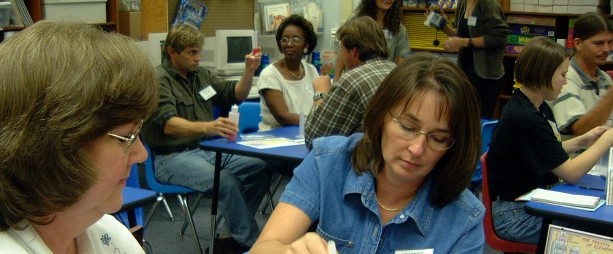
Professional development programs are available for science and mathematics teachers from K-12 as well as for STEM graduate students and university faculty members. These programs employ research-based teaching practices and are led by a team of professional developers with over 25 years of experience. Programs are available in a variety of formats and can be custom designed to meet the needs of schools, districts or university departments. For more information or to schedule a professional development program contact the Office of STEM Teaching Activities (850-644-6747). Below are the commonly requested workshops.
|
|
Constructing scientific explanations provides a learning experience in which learners make sense of science ideas by “figuring out” natural phenomena. Developing scientific explanations based on evidence and supported with scientific reasoning is fundamental to accomplishing the practices of science in the classroom. When teachers engage students in developing scientific explanations and the sense-making it requires, students are actively accomplishing most, if not all, of the practices of science. The students become active learners engaged in “figuring things out” rather than passive learners, which has been shown to provide deeper understanding and retention of science concepts. These skills are foundational to writing in science. In this workshop, teachers will engage in activities to explore how to work with students to develop claims, support them with evidence, and provide the reasoning that ties the evidence to the claim and to science concepts and principles they are teaching in class. Workshop activities include engaging in classroom exemplars, unpacking the teaching moves this practice of science teaching requires, and reflecting on how this accomplishes teaching for sense-making. This workshop can be structured for either primary or secondary science teachers.
|
 In our increasingly data-driven society, data literacy is an important civic skill to be developed in our learners –– and what better place to develop these skills than in science class. In addition to its importance as a civic skill, learners can engage in more meaningful science learning experiences from K-12 by using data to connect school subjects with real-world events. Further, large data sets are increasingly becoming available for teachers to use in the exploration phase of their science lessons. In this workshop, participants will engage in science exemplar lessons that also explicitly teach data literacy. Participants will examine and reflect upon the data literacy components of the lesson and how they were “scaffolded” throughout the lesson. They also engage in activities designed to make them (and their students) more critical consumers of data visualizations in everyday life. Participants will then engage in an activity in which we develop a learning progression for teaching data literacy skills across the grades, beginning with primary grades and working through the secondary grades.
|
|
Scientific modeling is a core practice in science whereby scientists represent evidence-based explanations for natural phenomena, models, and use them to generate predictions and drive further research. Just as with scientists, modeling can help learners in science classrooms represent their ideas about scientific phenomena and revise and advance those ideas throughout a unit of instruction. Through model-based inquiry (MBI) teachers can implement all eight practices of science. This workshop will engage participants in an MBI exemplar of teaching, then examine the pedagogy underpinning it by drawing on what teachers just experienced.
|
|
How can we, as instructors, create a classroom culture that engages students in deep learning through motivation, developing metacongnition, and helping them manage the emotional side of learning? These are the challenges explored in this professional development workshop as participants explore the psyiological features of what empowers learning in the science classroom. Understanding the triad of motivation, metacognition, and emotion and how to support them in our classrooms help us design better learning experiences.
|
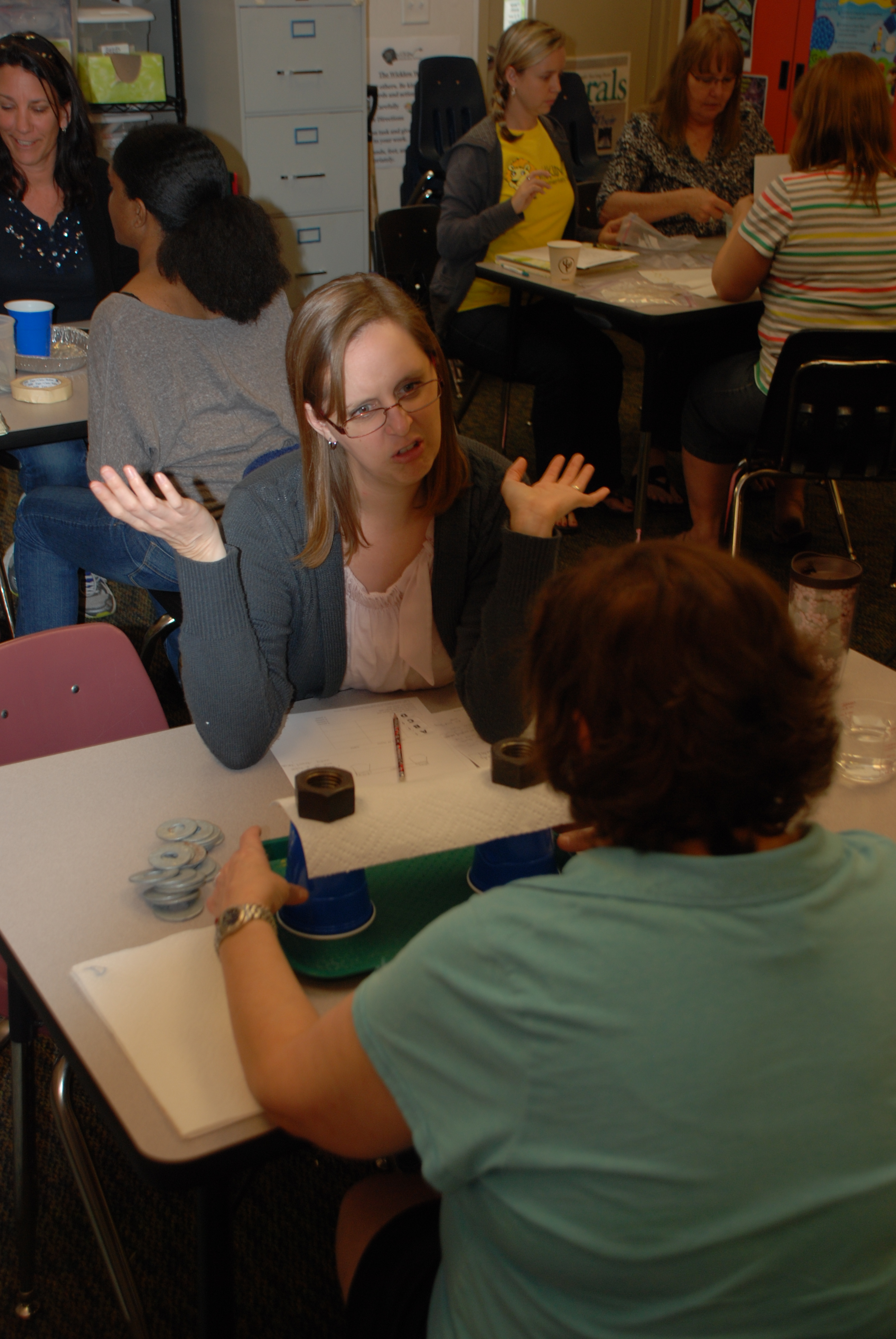 Communicating Science introduces participants to a series of effective, instructional practices using science curricula as exemplars of important educational strategies in science teaching. In each of its five sessions, research-based theoretical aspects of teaching are interwoven with practical lesson applications. Through experiencing activities designed for students, participants examine and analyze a variety of best practices in science teaching and learn more about the instructional strategies that underpin them. A particular focus of the workshop is science discourse in the classroom. Teaching practices from this workshop support the science proficiencies called for by the National Research Council of the National Academy of Science and upon which the national Next Generation Science Standards are built.
|
Students who are proficient in science:
- Know, use, and interpret scientific explanations of the natural world
- Generate and evaluate scientific evidence and explanations
- Understand the nature and development of scientific knowledge
- Participate productively in scientific practices and discourse.
(National Research Council, 2007; 2012; 2018)
(This workshop is based on professional development curricula developed by Lawrence Hall of Science, University of California-Berkeley.)
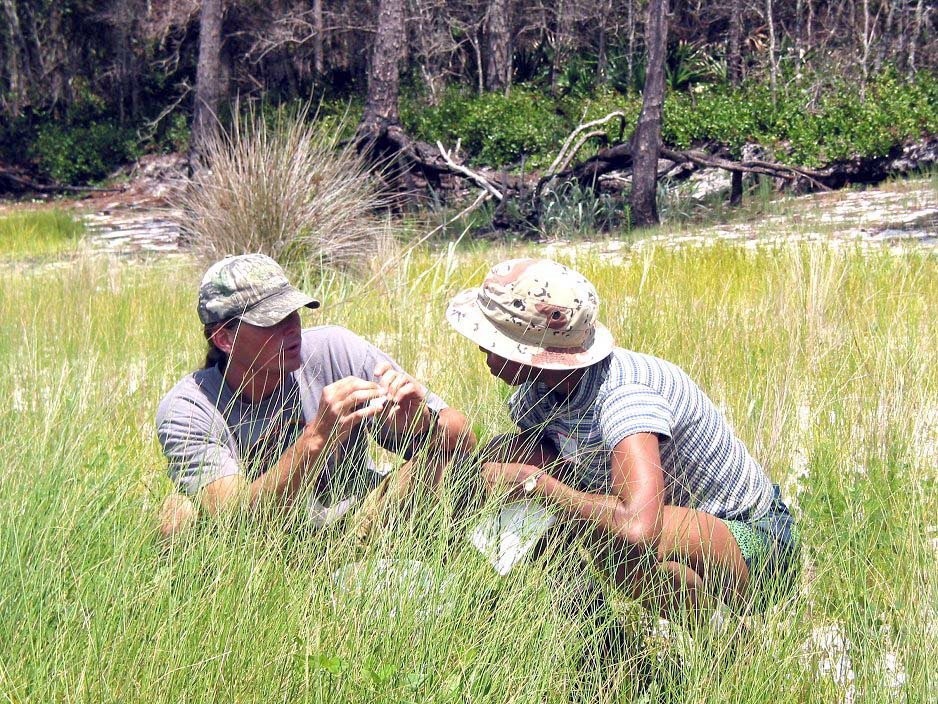 How does science work? What makes it different from other disciplines? When is something not scientific, but seems scientific? The Nature and Practices of Science is an intensive educational experience designed to deepen the science teaching knowledge and practice of its for instruction about science as a discipline. Instructional activities are used as exemplars of important educational strategies for teaching through inquiry and about the nature and practices of science. Research has shown that students must receive explicit instruction on this. The theoretical aspects of teaching are interwoven with practical lesson applications. Participants examine and analyze a variety of research-based best practices in science teaching that place them on the cutting edge of science teaching.
|
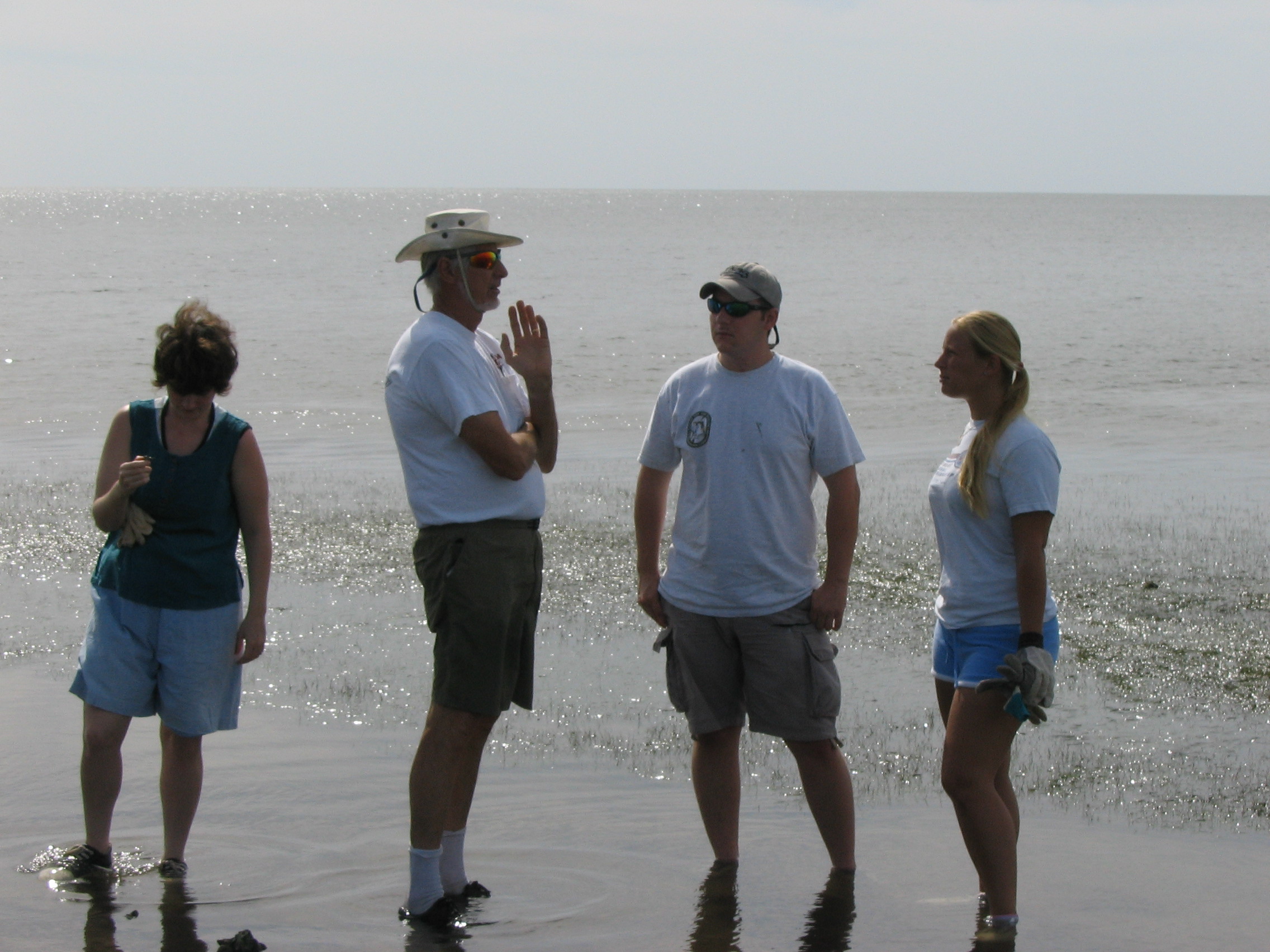 Classroom discourse is powerful for learning and supporting it is a critical strategy for science and mathematics teaching. Participants learn how to use questioning and student reflections about activities and experiences to develop and refine the concepts they are teaching. Questioning and responding in the classroom to engender critical thinking is an art, but one that can be honed through strategies developed through the activities in this workshop. Participants will learn to balance the amount of asking and telling through carefully sequenced questions and thoughtful responding. They are also introduced to tools and scaffolds to help them in this process.
|
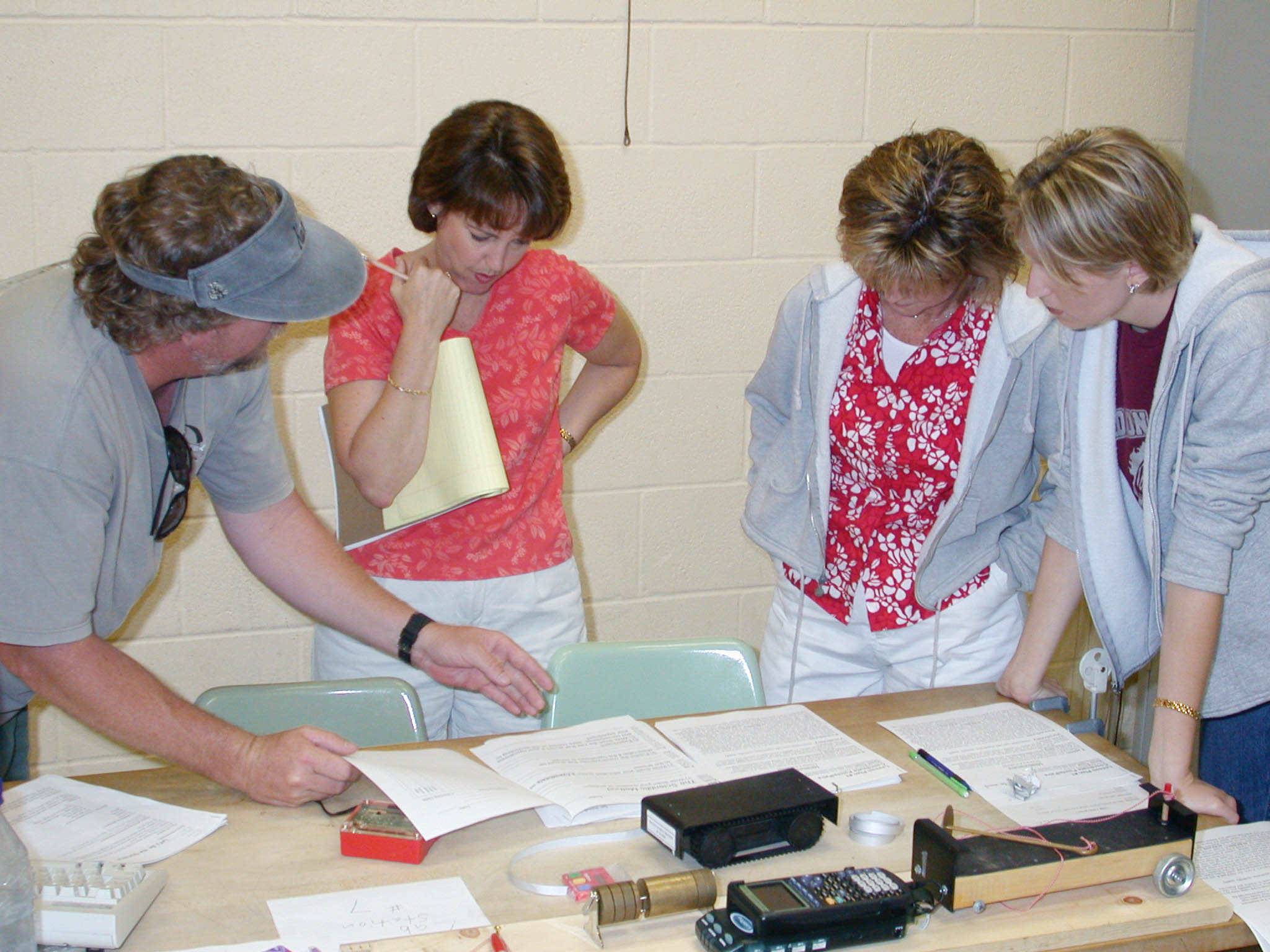 Analyzing mathematics and science tasks for their level of cognitive demand is an important professional development tool for math and science teachers. This professional development experience introduces participants to the effective Task Analysis technique developed by mathematics researchers and revised by scientists (see references below*) as a way to evaluate classroom activities based on how much thinking they require of students. Once this technique is mastered, teachers can use it as a template to assess their own instructional activities on a regular and continuing basis and to institute changes based on their results. Teachers who are employing high-cognitive demand tasks are more likely to develop the depth of understanding in their students called for by the Common Core State Standards for mathematics and the national Next Generation Science Standards. Analyzing mathematics and science tasks for their level of cognitive demand is an important professional development tool for math and science teachers. This professional development experience introduces participants to the effective Task Analysis technique developed by mathematics researchers and revised by scientists (see references below*) as a way to evaluate classroom activities based on how much thinking they require of students. Once this technique is mastered, teachers can use it as a template to assess their own instructional activities on a regular and continuing basis and to institute changes based on their results. Teachers who are employing high-cognitive demand tasks are more likely to develop the depth of understanding in their students called for by the Common Core State Standards for mathematics and the national Next Generation Science Standards.
(*Stein, M.K., Smith, M.S. 1998. Mathematical Tasks as a Framework for Reflection: From Research to Practice. Mathematics Teaching in the Middle School. 3:268-275.
*Tekkumru-Kisa, M., Stein, M.K., Smith, M. 2015. A Framework for Analyzing Cognitive Demand and Content-practices Integration: Tasks Analysis Guide in Science. J. Res. Sci. Tchg. 52:659-685.)
|
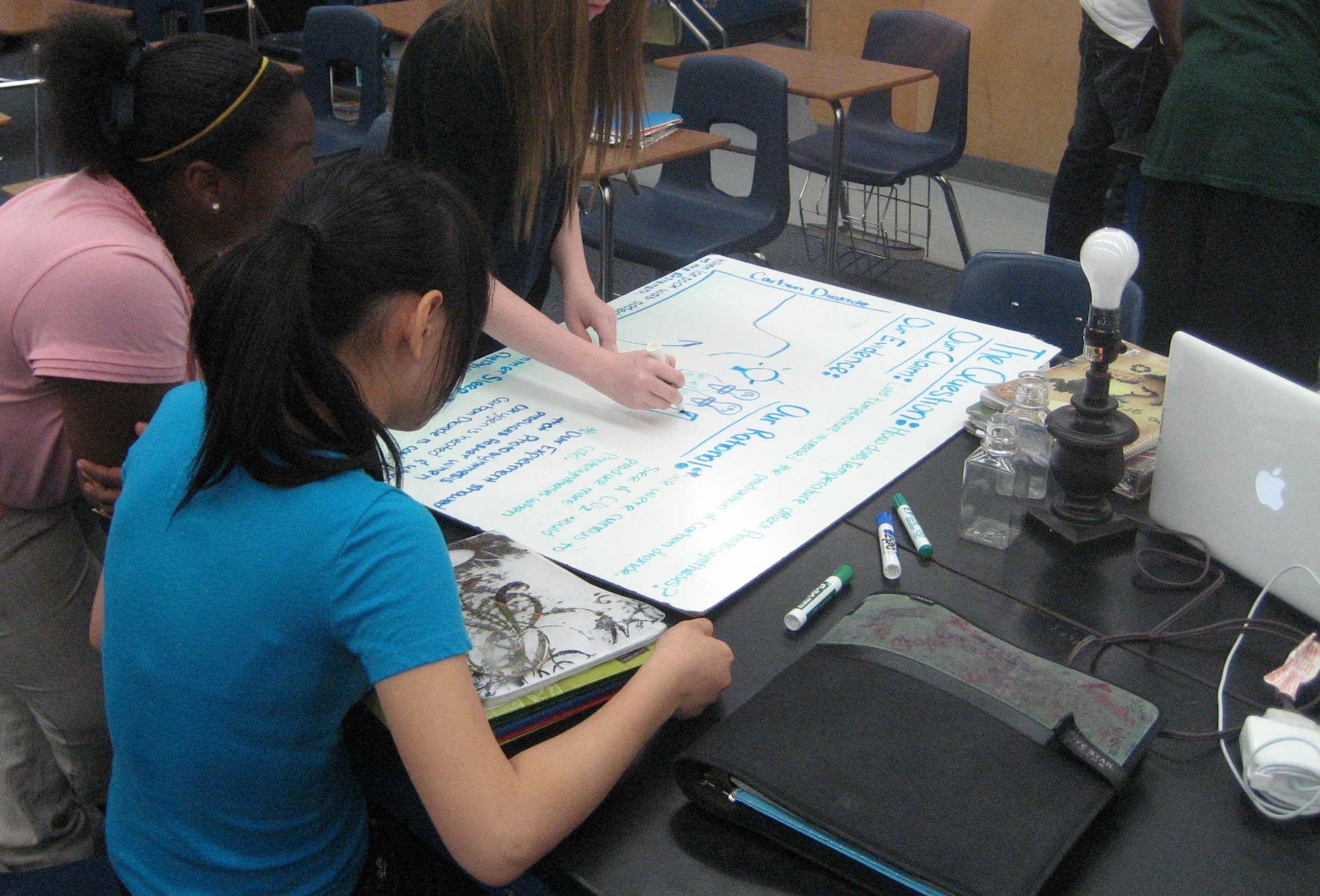 Teachers will need to change how they teach science to develop science-proficient students and meet the national Next Generation Science Standards. Science activities and experiences will need to be more authentic so that students have the opportunity to engage in the practices of science, including scientific thinking. This professional development experience introduces teachers to pedagogical practices that help their students learn to develop scientific explanations and engage in argument from evidence. Teachers must take on a new or unfamiliar role in scientific explanation and argumentation activities and this workshop will help prepare them to do so. Teachers will need to change how they teach science to develop science-proficient students and meet the national Next Generation Science Standards. Science activities and experiences will need to be more authentic so that students have the opportunity to engage in the practices of science, including scientific thinking. This professional development experience introduces teachers to pedagogical practices that help their students learn to develop scientific explanations and engage in argument from evidence. Teachers must take on a new or unfamiliar role in scientific explanation and argumentation activities and this workshop will help prepare them to do so.
|
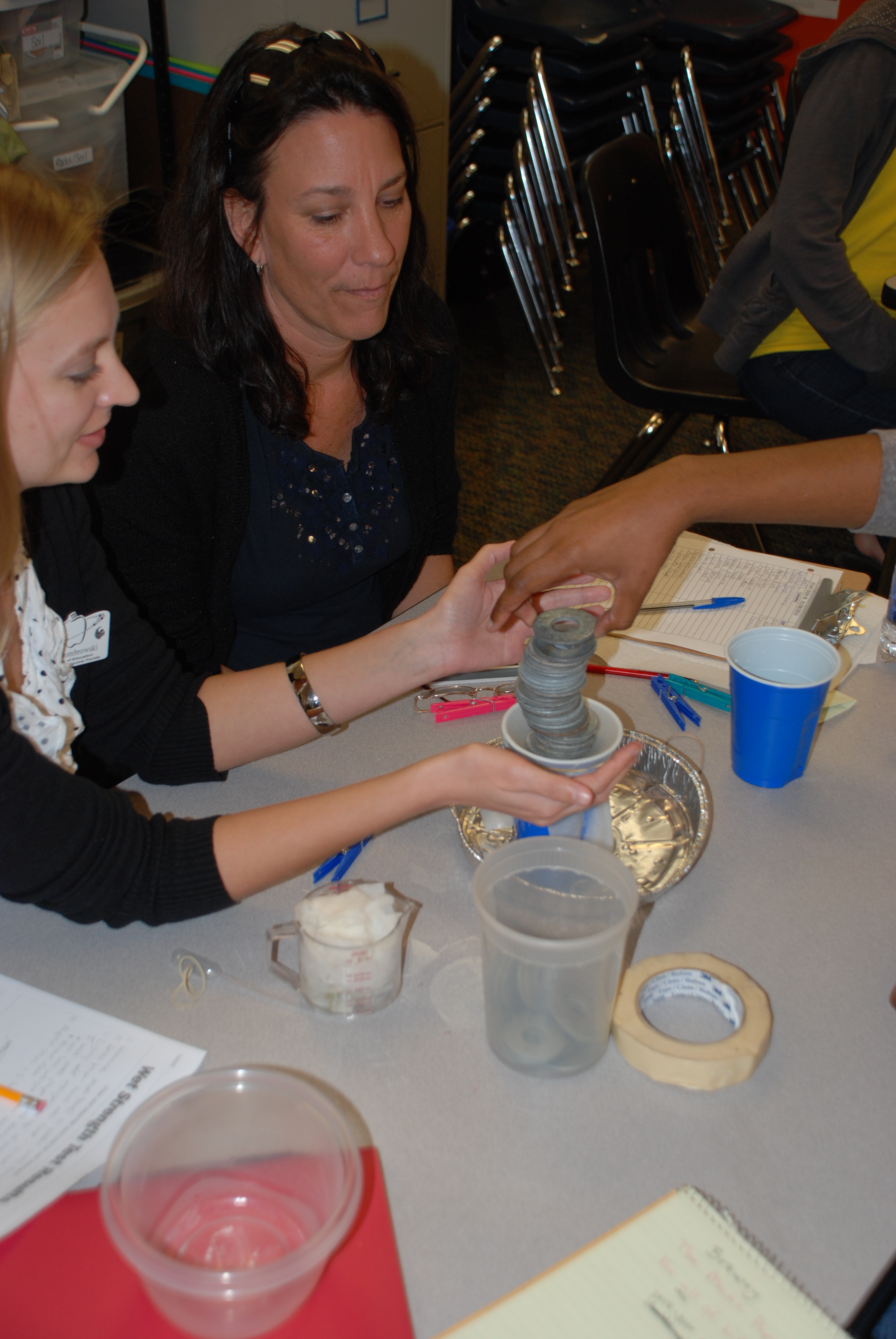 GEMS curricula are a suite of more than 75 math and science units developed by Lawrence Hall of Science at the University of California-Berkeley. OSTA is a regional GEMS Center.
GEMS workshops are designed to introduce K-5 and 6-8 grade teachers to GEMS curricula and to the research-based teaching practices that underpin them. Teachers learn student-centered teaching practices by participating in GEMS science and mathematics units and comparing them with traditional teacher-centered teaching practices. This serves as an introduction to teaching practices that support the Common Core State Standards for mathematics and the national Next Generation Science Standards. Half-day, one-day, two-day, and three-day workshop formats are available.
|
|
Lesson Study is teacher-lead professional development that is ongoing, collaborative and practiced in teachers' classrooms with their own students. It is common in Japan and has received more and more recognition in the U.S. as a way for teachers to develop their practice. In the words of well-known lesson study researcher, Catherine Lewis*, "...lesson study is a cycle in which teachers work together to consider their long-term goals for students, bring those goals to life in actual 'research lessons', and collaboratively observe, discuss, and refine the lessons." This workshop introduces its participants to lesson study. Teachers learn how to take a research stance toward their practice through inquiry, reflection, and critical examination of lessons; build collaboration and a learning community with their colleagues; and develop a lifelong learning practice in which members of their learning community support each other in honing their teaching craft.
(*Lewis, C.C. (2002) Lesson Study: A Handbook of Teacher-Led Instructional Change. Research for Better Schools. Philadelphia, PA. pp. 1.)
|
 Customized workshops focused on particular STEM content are available upon request. This includes biology, physics, chemistry, geoscience, environmental science and mathematics. All instruction in focused content workshops models best practices in STEM teaching.
|
|
Professional development experiences focused on science and/or mathematics instruction for principals and other school administrators are available. These workshops are designed to help those in school leadership positions become instructional leaders in science and mathematics teaching and learning. Instruction in all content areas does not look the same and a one-size-fits-all approach to teaching does not promote best student learning. Thus, school leaders must develop expertise in helping their teachers develop discipline-based instructional practices that research has shown to support student outcomes. Workshops focused on science and math instruction are available for school leaders on topics such as task analysis, lesson study, professional learning communities, classroom discourse, and science or mathematics classroom practices.
|