Connecting Teachers and Students with STEM and Discovery
The Office of STEM Teaching Activities (OSTA) was formed by the College of Arts and Sciences in 1983 in response to the report, A Nation at Risk (National Commission on Excellence in Education, 1983, Washington, DC). The function of the OSTA is to coordinate all activities related to science and mathematics teaching within the College of Arts and Sciences and to serve as the College's liaison with the College of Education. Over the years OSTA has initiated many activities for K-12 teachers and students, and for undergraduate and graduate students at Florida State University. As well, OSTA faculty members are active in science and mathematics education research.
|
|
Mission Statement The Office of STEM Teaching Activities (OSTA) in the College of Arts & Sciences at FSU is dedicated to translating the results of STEM education research into impactful STEM programs for K-12 students and teachers. To do so we provide STEM education experiences built on strategies, practices, and resources shown to be effective in fostering and maintaining student engagement in STEM. Through high-quality STEM programs, OSTA works to increase not only the number of students prepared to continue their STEM education and/or join the STEM workforce, but also to foster science and mathematics literacy for all. |
|
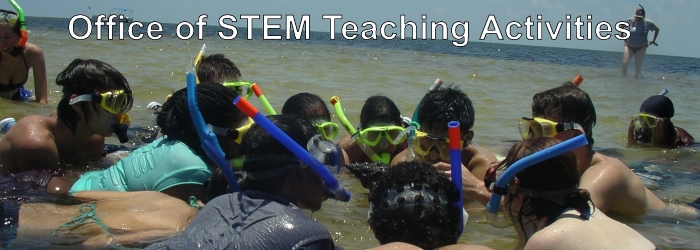
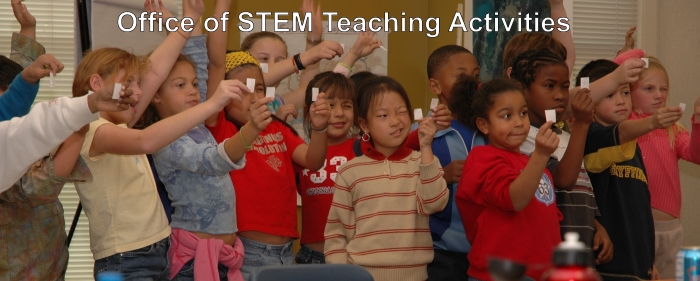
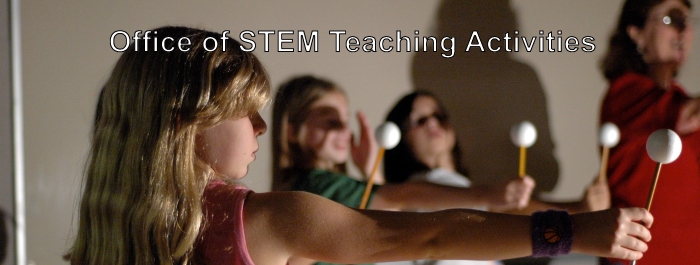
K-12 Student Outreach Programs In partnership with the science and mathematics departments at Florida State, the Office of STEM Teaching Activities has developed and offers many programs that engage K-12 students in science and/or mathematics learning. Many of these programs are award-winning with a history going back more than 30 years, yet all are updated and evaluated annually to keep their content current and to ensure that they employ cutting-edge, research-based teaching practices. |
|
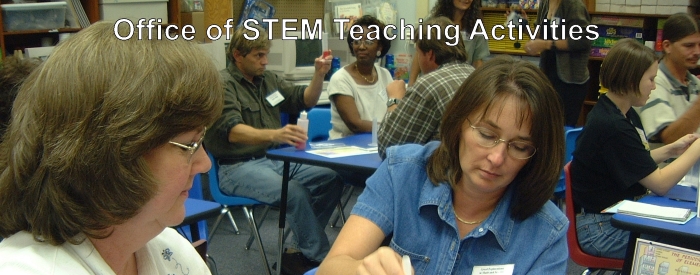
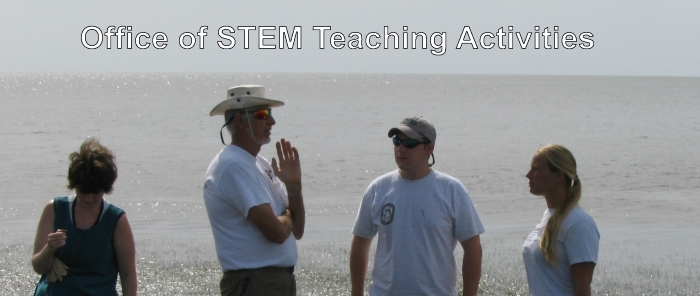
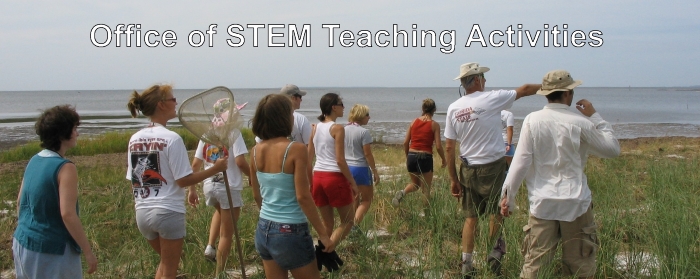
Teacher Professional Development Programs The Office of STEM Teaching Activities offers a host of teacher professional development experiences for preK-12 teachers and their administrators as well as for college teachers. These high-quality programs are designed to deepen the knowledge of educators about research-based best practices in science and/or mathematics teaching and learning. Participants experience these best practices as they strengthen their content knowledge and their pedagogical content knowledge. The professional development faculty members from the Office of STEM Teaching Activities have strong STEM and STEM teaching backgrounds and demonstrated records of instructional excellence. |
|
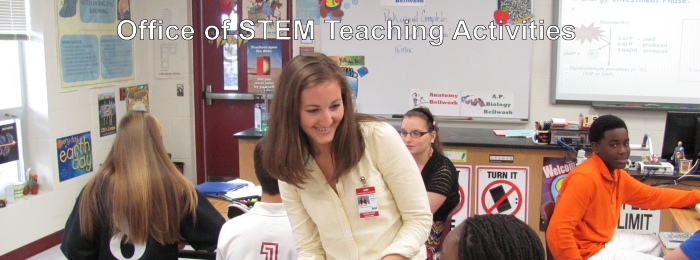
The Office of STEM Teaching Activities offers two programs for individuals seeking to become science or mathematics teachers, one undergraduate and two graduate. The FSU-Teach program is an undergraduate teacher preparation program that is a partnership between the Colleges of Arts & Sciences and Education that culminates in a bachelors degree with a double major--one in mathematics or science (Biology, Chemistry, Environmental Science, Geosciences, or Computer Science) and one in mathematics or science teaching. At the graduate level students may pursue a Masters in STEM Teaching, with a focus on college STEM teaching for students who would like to focus on teaching in community colleges or four year colleges. |
|
University Faculty and Graduate Student Services Support is available to university faculty members and to postdoctoral and graduate students for STEM education professional development and/or broader impact sponsored research activities. Lead by a team of faculty with both STEM disciplinary and STEM education expertise, this support is available through established programs or can be custom-designed to meet the faculty or student needs. See linked descriptions and contact the Office of STEM Teaching Activities (OSTA) to learn more. |
|
To further its mission of identifying and providing support for best practices in STEM teaching and learning, the Office of Science Teaching Activities engages in rigorous scientific research of STEM education practices. Such research is crucial to inform STEM education practitioners at all levels and to enable teachers to provide the best instruction to maximize their students' STEM learning. Results from these research projects are disseminated in peer-reviewed journals and at national and international meetings. |