Welcome to Ecology and Evolution at Florida State University
Research Strength
Florida State University has long been at the forefront of ecology. Work on the role of competition and the niche done at FSU in the 1980’s changed the direction of ecology. Our traditional strength in evolution is in evolutionary ecology, including such areas as life history, plasticity, and mating systems. Our current group spans the interface between ecology and evolution, focusing on experimental, theoretical and comparative approaches. While we have strengths in a variety of areas, common themes that tie our group together are a focus on concepts, an appreciation for quantitative approaches, and an interest in considering questions broadly from both ecological and evolutionary perspectives.

Below are faculty from the EE group and associates at FSU listed by areas of research. Follow links for a more complete description of their work. The Faculty Directory lists faculty alphabetically, and lists faculty with related research interests from other departments on campus.

Behavior
Faculty: DuVal, K. Hughes, Moriarty-Lemmon, Travis, Tschinkel
Faculty emeritus: Herrnkind

Ecology and Conservation Biology
Faculty: DuVal, Inouye, Lee, Levitan, Miller, Travis, Tschinkel, Underwood, Winn, Wulff
Marine lab faculty: Coleman, Craig, Grubbs, R. Hughes, Koenig
Faculty emeritus: James
Associates: Dixon

Evolutionary Morphology
Faculty: Erickson, Steppan
School of Computational Science faculty: Slice

Evolutionary and Ecological Genetics
Faculty: DuVal, K. Hughes, Moriarty-Lemmon, Houle, Levitan, Rokyta, Steppan, Travis, Underwood, Winn
School of Computational Science faculty: Beerli, Lemmon, Naylor, Slice

Marine Biology
Faculty: Levitan, Wulff
Marine lab faculty: Coleman, Craig, Grubbs, R. Hughes, Koenig
Faculty emeritus: Herrnkind, Livingston, Mariscal

Phylogenetics/Systematics
Faculty: Abele, Moriarty-Lemmon, Mast, Steppan
School of Computational Science faculty: Beerli, Lemmon, Naylor, Wilgenbusch, Thompson
Faculty emeritus: Anderson
Associates: Spears

Theoretical, Computational, and Mathematical Biology
Faculty: Houle, Inouye, Lee, Rokyta
School of Computational Science faculty: Beerli, Lemmon, Naylor, Slice

Graduate Program
In many graduate programs, students disappear behind the closed doors of their advisors' labs for five years. This is not the Florida State way. Instead we emphasize the importance of a broad background in all aspects of population biology to studies in either ecology or evolution. Mirroring our faculty, the graduate-student group is interactive, cohesive, and mutually supportive. Students usually share office space with those from different labs. Although students in our program pursue a flexible course of study with a minimal set of required courses, most do take the introductory sequence of four courses. These common experiences set the stage for interactions across disciplines that often continue long after students have left Florida State.

Varied natural environments

Natural environments
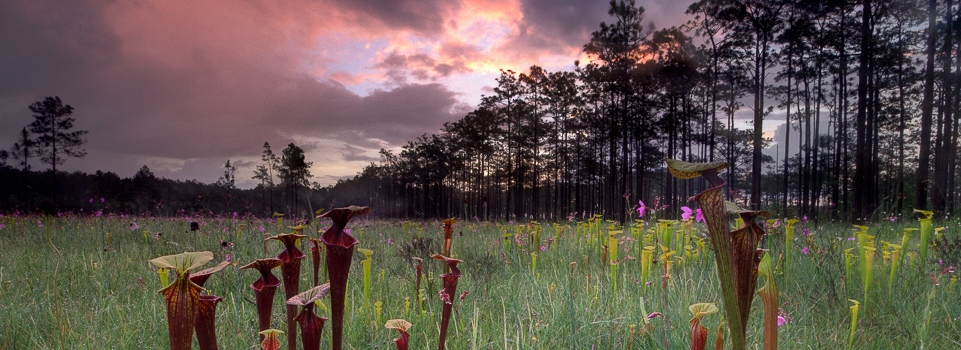
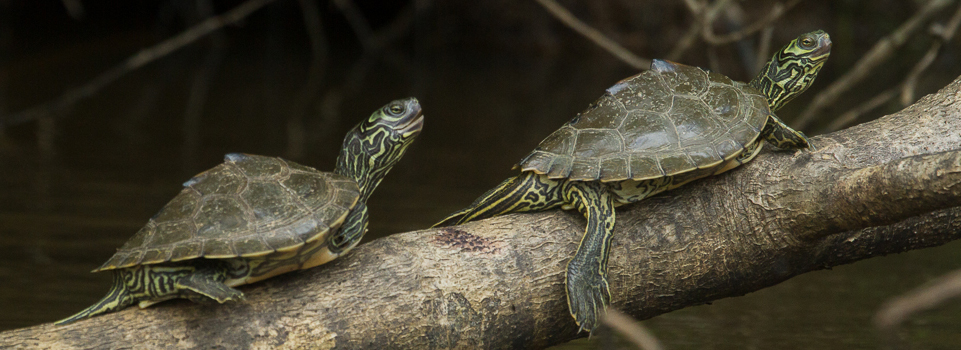
Many of our faculty and graduate students do research in the superb array of nearby habitats. These include:

List of research habitats:

  • seagrass beds, salt marshes, and open waters in the Gulf of Mexico
  • long-leaf pine savannahs and hardwood swamps in the Apalachicola National Forest
  • varied rivers and lakes
  • agricultural fields and successional "old-fields"
  • relict Appalachian vegetation that persists in cool "steepheads" along river valleys
  • red clay hills at Tall Timbers Research Station.
tree canopyTallahassee is a pleasant, small city of about 170,000, where two universities and the state government are the major employers. Off the main roads, Tallahassee is a city of trees—huge live oaks, magnolias, and cypresses dominate the look of our neighborhoods.


Florida State University
E&E Home | Faculty | Research | Graduate Experience
Undergraduate Experience | Tallahassee Area | Dept. Home | www.fsu.edu