
Science Prediction Market
| What is the difference between a good and bad science experiment? This is a question that was thoroughly answered by Karl Popper in the early 20th century. He came to the now widely accepted conclusion that good science involves falsifiable hypotheses, while pseudoscience is unfalsifiable. This rule of falsifiability is now standard in science, but the reason for the rule seems to be widely misunderstood. Popper explained the reason nicely in an article entitled, "Science as Falsification”. Briefly, the idea is that science should answer questions to which we do not already know the answer. Theories and hypothesis that have a chance to be proven wrong through experimental observation are therefore valuable contributions to our advancement of knowledge, while theories and hypotheses that have no risk of being wrong do not increase knowledge. This “demarcation line” so nicely distinguishes science from pseudoscience, that I propose to take it one step further – can we quantify the scientific value of an experiment in terms of how much of a chance it has of falsifying a hypothesis? |
|
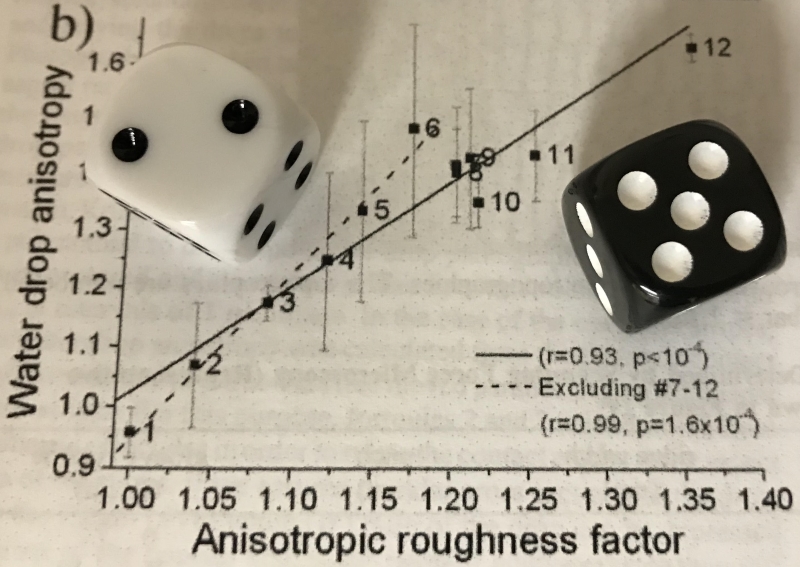
| My idea for quantifying this chance is to set up a new kind of peer review system that allows reviewers to wager on the experiments. A scientist can propose a scientific question, hypothesis, and experiment to test the hypothesis. That scientist can provide possible outcomes of the experiment, along with proposed probabilities for each outcome. Reviewers can then bet on the outcomes, and the betting lines can move to balance the expectations as is commonly done in sports betting. The value of the knowledge to be gained by the experiment can then be gauged by how much betting takes place, as well as what the odds are for different outcomes. I suggest to start by having reviewers wager points to minimize pitfalls and legal implications. Perhaps once the details are ironed out this approach could be used as a kind of crowdfunding mechanism, where real money could be wagered and a small percentage is used to fund the experiment. |
|
Please contact Steven Lenhert to discuss your interest in the science prediction market. Originally published online June 29, 2018 Last updated August 23, 2024 |